A short history about Mioritic

Health, Breeds Standard etc.
Post Reply
User avatar
Oliviu Secara
Site Admin
Posts: 2097
Joined: Tue Sep 04, 2012 5:45 pm
Location: Bihor, Oradea
Contact:

ROMANIAN MIORITIC SHEPHERD DOG - SHORT HISTORY

- during the migration of Celtic tribes - the celts, being among the first Indo-European population who spread out in Europe in the eve of the second millennium BC, coming from east/southeast - they where accompanied by kindred dogs;
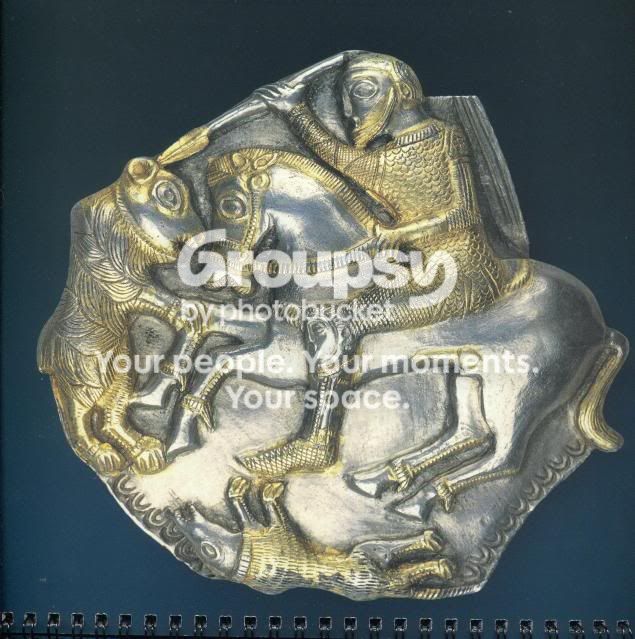
- in 1963, at Letniţa a silver golden plate is discovered representing an armored horseman with beard and long hair holding in the right hand a cup, and behind the horse a massive dog can be seen, with long hair, the similarity to the Mioritic shepherd being more than obvious ( these plates are dated between 400 and 305 BC );
- there are also testimonies of the Romans according to which the Dacs used specialized dog breeds for grazing and hunting;
- in the centuries until the beginning of the XXth century, taking into account that the basic occupation of the population living in the Carpathian-Danube-Black Sea triangle was sheep and cattle keeping that requires the use of some specialized dogs for driving and protecting the flock;

- around the year 1930 the first standardization attempts are made by the Romanian Royal Canine Association, which led to the development of the first standard project in the years 1935-1936;
- in the first days of May 1981 a new standard project is released for this breed;
- August 22, 2004 - specimens of this breed are shown in Gura Humorului to the representatives of the Tehnical Board of the International Canine Federation;

Image
Photo source mioritic.net/expofci.htm

- July 06, 2005 - the General Committee of the International Canine Federation gathered in Buenos Aires approves the acknowledgment of the breed, the last version of the standard being recorded with registration number 349 on the list of the International Canine Federation of acknowledged breeds.

ROMANIAN MIORITIC CLUB - SHORT HISTORY

- May 22, 2004 - 50 breeders, owners and breed enthusiast decide the foundation of the club with the name of MIORITIC CLUB;
- April 16, 2005 -MIORITIC CLUB is acknowledged by the Romanian Canine Association as a representative National Club for the Romanian Mioritic Shepherd Dog;
- from the end of year 2005 the MIORITIC CLUB has a new name: ROMANIAN MIORITIC CLUB.
- info distributed by the Club at EDS 2012

Mioritic Shepherd - Male & Female

Image


„Iar când veni şi vremea să urle-n zare tunul, / Mişcatu-s-au românii cu miile, ca unul”
cezar osiceanu
Posts: 775
Joined: Mon Oct 08, 2012 6:55 pm

Are missing a lot of data from ths stories!Maybe it will be better to complete them in the interest of the breed!
Just a few:
- in 1998 was the first correctly standardization of thebreed done by the CNCCR and Faculty of Vetrinary Medicine form Bucharest
- in decemeber 1998 the first final of the Romanian Championship for the Romanian Shepherd Dogs was in Bucharest and the chief of Standard Committee of the FCI dr Pschoud was there officialy in order to check the situation of the romanian breeds
- 2000 World Dog Show in Milano the place wher for the first time in the kenneling history the mioritic was presented officially
- 2004 the first ever international recognaizing of the mioritic asa breed was done also by the CNCCR
- the decision taken much more later by the FCI in order to accept the continueing of the process for the inernational recognaizing of the breed inside of them were based on the documentation sended by the CNCCR
- etc
etc


simonamirescu
Posts: 72
Joined: Mon Sep 10, 2012 6:21 am

Preferabile date istorice pertinente - a se citi Istoria românilor - Constantin Giurescu .
Iar daca tot se folosesc fotografii, de preferat standardul - cel putin pentru mine, este sfant!


User avatar
Oliviu Secara
Site Admin
Posts: 2097
Joined: Tue Sep 04, 2012 5:45 pm
Location: Bihor, Oradea
Contact:

simonamirescu wrote:Preferabile date istorice pertinente - a se citi Istoria românilor - Constantin Giurescu .
Iar daca tot se folosesc fotografii, de preferat standardul - cel putin pentru mine, este sfant!
In English please Mrs. Simona.
Why are you keep telling that those two dogs in the photo (male & female) are out of Standard ? I know that you have seen them live and an image won't deceive you.
And ohhh... The Mioritic Standard should be really and truly saint for each breeder !
:mrgreen:


„Iar când veni şi vremea să urle-n zare tunul, / Mişcatu-s-au românii cu miile, ca unul”
User avatar
Oliviu Secara
Site Admin
Posts: 2097
Joined: Tue Sep 04, 2012 5:45 pm
Location: Bihor, Oradea
Contact:

I'm happy to see that the topic got your attention. I recevied a few questions, comments, private messages on facebook about the info in this topic, and in the next few words i'll try to clear your doubts regarding the "short history about Mioritic" .

First of all, at Letniţa, were discovered 25 silver golden plates in a bronze vesel representing different moments of a story. For our issue, just a few are important.

Here is one image scaned from a book and also another important photo just to see their natural color and details :

First one
Image
"- in 1963, at Letniţa a silver golden plate is discovered representing an armored horseman with beard and long hair holding in the right hand a cup, and behind the horse a massive dog can be seen, with long hair, the similarity to the Mioritic shepherd being more than obvious ( these plates are dated between 400 and 305 BC );"
- also you can remark the terminal third of the dog's tail which is curbed like a ring. This aspect can be seen even nowadays to an important part of Mioritic population.

Second one
Image
- bear hunting
- another similar dog is under the horse (possibly injured or dead)

And now, a few pieces of information regarding the Celts; that's because a reader made a remark on the Celtic tribes arrival. He has put in doubt the veridicity of the next line which I wrote at the beginning of the topic:
"the Celts, being among the first Indo-European population who spread out in Europe in the eve of the second millennium BC, coming from east/southeast "

The Indo-European Migration and Settlement
(IV-I mill. BC)

- " The Thracians were the first Indo-Europeans to live in Europe, and their territories comprised the lands between the Baltic Sea and Greece, from north to south, and between the Ural Mountains and the Tatra Mountains, from east to west. The formation of the Thracian communities appreciably antedates the emergence of the other Indo-European communities: Celtic, Germanic, or Slavic. The ancestors of the Thracians, as seen before, had lived on the same territory since the Stone Age. "
...

-"In the same way in which Western Europe always remembers and cherishes its Celtic origins, Eastern Europe venerates its respective Thracian ones, for absolutely the same reasons. The only difference is that Eastern Europeans remembers the Celts, who passed through their territory before reaching their traditional habitat in the West, and back through the same territories one thousand years later, on their way to Galata (in today’s Turkey). "

Image

The great celtic migration in Europe was much more later than their arrival in Europe. In conclusion they came from east/southeast and after that they spread almost all over the Europe
:D They came in 2'nd millennium BC and spread in 1'st millennium BC.

Image

The understanding of our past will help create a harmonious future, whereas its ignorance will create only chaos and conflict. We are all responsible for our future, and the choice between the knowledge and the ignorance of our past belongs only to ourselves.

Those fragments are from:

"A BRIEF HISTORY OF ANCIENT ROMANIAN CIVILISATION"

Conference given by Prof. Luminita Rollé
BA, MA, MSc. by Research
on 24th June 1999 at the
House of Europe Villa Moynier, GENEVA

under the Authority of THE EMBASSY OF ROMANIA in Bern
and
His Excellence Mr. RADU BOROIANU
Ambassador of Romania in Switzerland
in collaboration with
ACUAREL The Cultural and Artistic Association of the Swiss Romanians


„Iar când veni şi vremea să urle-n zare tunul, / Mişcatu-s-au românii cu miile, ca unul”
cristidami
Posts: 111
Joined: Tue Sep 11, 2012 10:25 am

Oliviu, you say about the creature on first image: "the similarity to the Mioritic shepherd being more than obvious". OBVIOUS?! Well, I consider myself as been a very imaginative man, but I cannot see the Mioritic at all. Are you sure that it is a dog? However, the hoseman is a hunter, a basileus - not a shepherd. Only peasants used to hunt with shepherd dogs. So, if it is a dog, it is a royal-hunting dog.

Here is a better view od the second image:
Image

I would be glad these two picture to show Mioritic Shepherd Dogs, but I don't think so... Not even a shepherd one.


User avatar
Oliviu Secara
Site Admin
Posts: 2097
Joined: Tue Sep 04, 2012 5:45 pm
Location: Bihor, Oradea
Contact:

Those dogs on the plates represent the ancestors of Mioritic, not the modern Mioritic shepherd dog. It is known that Mioritic was used in bear hunting even in modern days, so why we couldn't accept that it was used for hunting bears (a specific hunt with a precise set of actions) in ancient times ?
Mr. Prof. drd. Laurenţiu Florin Puicin studied the issue closely and considerd those images being representations of furry dogs ancestors of Mioritic Sheepdog - Consideraţii istorice cu privire la originea raselor de câini ciobăneşti româneşti, (fragment), în curs de apariție.


„Iar când veni şi vremea să urle-n zare tunul, / Mişcatu-s-au românii cu miile, ca unul”
cristidami
Posts: 111
Joined: Tue Sep 11, 2012 10:25 am

A few words about "testimonies of the Romans according to which the Dacs used specialized dog breeds for grazing":
I know only about that story written by Sextus Julius Frontinus ((c. 40 – 103 p. Chr.) with two dogs and the wolf. We can accept that two dogs were shepherds, but it is not sure. This is that excerpt - words like "shepherd", "grazing", "livestock guardian dog" are not mentionend:

"Scorylo, a chieftain of the Dacians, though he knew that the Romans were torn with the dissensions of the civil wars, yet did not think he ought to venture on any enterprise against them, inasmuch p71as a foreign war might be the means of uniting the citizens in harmony. Accordingly he pitted two dogs in combat before the populace, and when they became engaged in a desperate encounter, exhibited a wolf to them. The dogs straightway abandoned their fury against each other and attacked the wolf. By this illustration, Scorylo kept the barbarians from a movement which could only have benefited the Romans. "

If there are any other evidence please let me know.


User avatar
Oliviu Secara
Site Admin
Posts: 2097
Joined: Tue Sep 04, 2012 5:45 pm
Location: Bihor, Oradea
Contact:

Good point Cristidami ! Anyway we can suppose that those 2 dogs were shepherds because it is known that the main occupations of the Dacians (Daco-Getae) were agriculture, apiculture, viticulture, livestock, ceramics and metal working.

Here is a scene from "Burebista" movie (1980) reflecting the story you mentioned above:


„Iar când veni şi vremea să urle-n zare tunul, / Mişcatu-s-au românii cu miile, ca unul”
User avatar
Raul Petruț
Posts: 362
Joined: Mon Sep 10, 2012 4:53 pm
Location: Fildu de Jos
Contact:

cristidami wrote:A few words about "testimonies of the Romans according to which the Dacs used specialized dog breeds for grazing":
I know only about that story written by Sextus Julius Frontinus ((c. 40 – 103 p. Chr.) with two dogs and the wolf. We can accept that two dogs were shepherds, but it is not sure. This is that excerpt - words like "shepherd", "grazing", "livestock guardian dog" are not mentionend:

"Scorylo, a chieftain of the Dacians, though he knew that the Romans were torn with the dissensions of the civil wars, yet did not think he ought to venture on any enterprise against them, inasmuch p71as a foreign war might be the means of uniting the citizens in harmony. Accordingly he pitted two dogs in combat before the populace, and when they became engaged in a desperate encounter, exhibited a wolf to them. The dogs straightway abandoned their fury against each other and attacked the wolf. By this illustration, Scorylo kept the barbarians from a movement which could only have benefited the Romans. "

If there are any other evidence please let me know.
Indeed Cristidami, it's not proven that the two dogs Scorylo used were LGD's but if we take in consideration the fact that the dogs stopped the fighting when they felt the wolf can mean only one thing: They have met the wolf before and they were used to act as pack when wolfs were around. From my point of view this means only one thing, the dogs were used to guard livestock, most likely sheep. And it's a fact that the wolves have been and still are the biggest enemy of the sheep flocks causing more looses than any other predator.

And as Oliviu mentioned above the people living in the areas of modern Romania were among the best shepherds in Europe, travelling and spreading their culture in Europe. After a lot of genetic studies, the leading scientists in the field, have all come to the same conclusion and result. The Romanian TURCANA sheep its a prehistoric breed dating from the firs populations in Europe that lived in the Charpatians basin. So if we had the first sheep in Europe, why wouldn't we dare to say that we had the first shepherds as well. I mean its common sense, if you are having sheep, then something must protect them against predators. Although we do not have precise description of the dogs that protected the flocks we can only guess how it would been locking like.

And please do not try to compare the dogs on the historical plates, with the ones of the modern days, as obviously they evolved and changed during the years as mostly of the breeds have. Regardless of what the modern days dog specialists are saying about the beginnings and traces of the Romanian dogs, we know one thing, they existed on the land of our ancestors for thousands of years, way before the rest of Europe's civilisation started to keep livestock flocks. They are several ancient writing that mention Dacian shepherds that came to their area and teach them how to grow the sheep, to process the milk and do the cheese. Apparently nobody thought its important to investigate the matter deeply.


Nu mai sunt nici Cânii bătrâni
Iar poienile-s pline spini
Nu mai e nici Florica
Mândră mai purta clopoțica
Multe trec, multe vin...
Numai amintiri rămân..
Post Reply

Return to “All about Romanian Sheepdogs”